
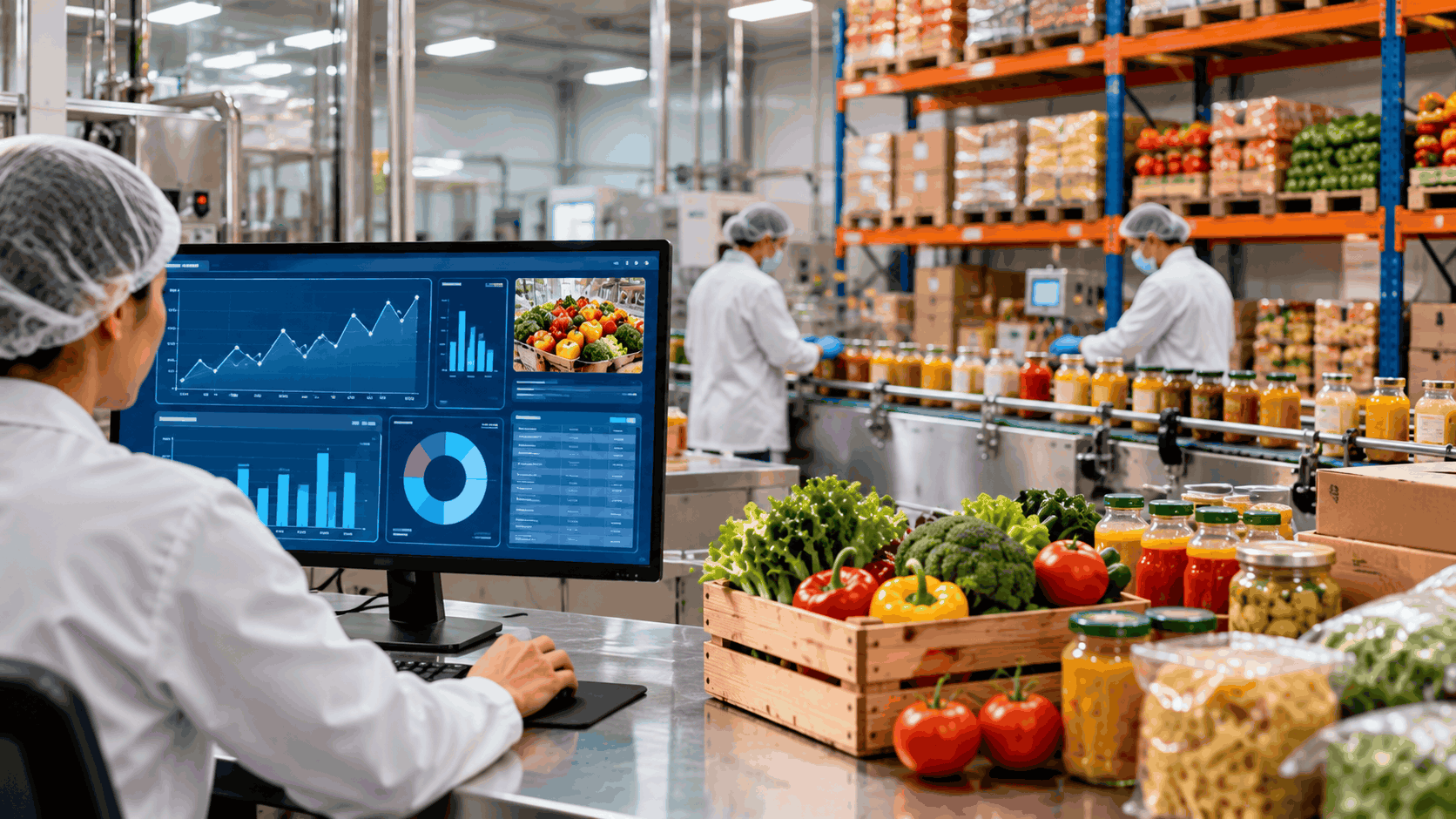
Introduction
Managing inventory is a major challenge for food manufacturers because raw materials, packaging supplies, and finished products must be available at the right time and in the right quantities. Overstocking can increase storage costs and the risk of spoilage, while insufficient stock can delay production and affect customer orders.
Predictive Analytics in Food Manufacturing helps businesses make informed inventory decisions by analysing historical data, sales patterns, seasonal trends, and other relevant information to estimate future demand. When combined with effective inventory management systems, these insights can help manufacturers plan purchasing, optimise stock levels, reduce avoidable waste, and improve operational efficiency. According to Microsoft’s guidance on predictive analytics in manufacturing, data-driven planning can help manufacturers forecast demand, coordinate production, and optimise inventory.
Understanding Predictive Analytics in Food Manufacturing
Predictive analytics uses statistical methods, data analysis, and, in some cases, artificial intelligence (AI) to identify patterns and estimate future outcomes. In food manufacturing, businesses can analyse previous sales, production records, supplier lead times, inventory movements, and seasonal demand to anticipate upcoming requirements.
For example, a beverage manufacturer may experience higher demand for certain drinks during warmer months. By examining historical sales and current orders, the business can estimate how much fruit concentrate, tea extract, sweetener, bottles, and other materials may be required.
These forecasts are not guaranteed predictions. Their accuracy depends on data quality, the forecasting method, and changes in market conditions. Nevertheless, they provide a useful foundation for data-driven decision-making.
Improving Food Demand Forecasting
Accurate food demand forecasting helps manufacturers align production and purchasing with expected customer requirements. Without reliable forecasts, businesses may produce more than they can sell or fail to manufacture enough products to meet demand.
Predictive analytics can identify patterns in sales history, seasonal fluctuations, promotional activities, and customer ordering behaviour. Manufacturers can use these insights to prepare production schedules and estimate the raw materials needed for upcoming orders.
For example, if sales records show recurring seasonal demand for a particular beverage, the manufacturer can plan ingredient procurement and packaging requirements in advance. Forecasts should also be updated when new orders, changing customer preferences, or unexpected market conditions affect expected demand.
Optimising Inventory and Stock Levels
Inventory optimisation involves maintaining sufficient stock to support production without tying up unnecessary money in excess materials. Predictive analytics in inventory management can help manufacturers estimate when supplies may run low and determine when replenishment may be needed.
Stock level forecasting considers factors such as expected consumption, current inventory, supplier delivery times, and minimum stock requirements. This can help purchasing teams plan orders before critical materials become unavailable.
A well-organised inventory management system can also track batch numbers, manufacturing dates, expiry dates, and stock movements. The first-expired, first-out (FEFO) method helps prioritise suitable stock with the earliest expiry dates, particularly for perishable ingredients.
Combining forecasts with regular physical stock checks is important because inaccurate records, damaged materials, and unexpected production changes can affect actual availability.
Reducing Food Waste and Unnecessary Costs
Excess inventory can lead to expired ingredients, damaged packaging, and finished products that remain unsold. These issues increase costs and may create avoidable food waste.
Predictive analytics can help manufacturers identify slow-moving products, estimate material requirements more accurately, and adjust purchasing plans to reflect expected production. Research on predictive modelling for demand forecasting and inventory management to minimise food waste discusses how demand forecasting can support inventory control and help address food waste.
For instance, if demand forecasts indicate lower sales for a particular product, a manufacturer can review its production schedule before committing to additional raw materials. Any changes should account for confirmed orders, minimum production quantities, supplier agreements, and material shelf life.
Read EXIITO's article on how AI and digitalisation are reshaping the food industry to explore how digital tools can support inventory planning, production management, and waste reduction. The FAO’s food loss and waste resources also explain why preventing avoidable food loss is important for efficient and sustainable food systems.
Strengthening Food Supply Chain Management
Inventory performance depends on more than internal stock records. Supplier reliability, transportation delays, changing ingredient availability, and longer procurement lead times can all affect manufacturing schedules.
Predictive analytics can help businesses compare supplier delivery history with production requirements and identify materials that may need earlier replenishment. Sharing updated forecasts with suppliers can also improve coordination and support more informed purchasing decisions.
However, manufacturers should account for unexpected disruptions and maintain appropriate safety stock for critical ingredients. The right stock level depends on product shelf life, supplier reliability, demand variability, and the consequences of a production stoppage.
Integrating purchasing, production, inventory, and sales information can give teams a clearer view of material availability and help them respond to changes more quickly.
Challenges and Future Trends
Although predictive analytics offers useful opportunities, implementation can be challenging. Incomplete records, inconsistent data entry, outdated software, and limited analytical expertise may reduce forecast accuracy. Sudden demand changes or supplier disruptions can also make historical patterns less reliable.
Manufacturers can begin by maintaining accurate inventory records, standardising data collection, and reviewing basic sales and consumption trends. As their systems mature, they can consider more advanced forecasting tools and integrate them with existing inventory management systems.
AI in food manufacturing may further support demand estimation, anomaly detection, and production planning. Nevertheless, forecasts should be reviewed by experienced staff rather than followed automatically. Human oversight remains essential when product quality, food safety, shelf life, and supply commitments are involved.
Conclusion
Predictive analytics in food manufacturing can help businesses improve demand forecasting, optimise inventory, reduce avoidable waste, and coordinate purchasing with production requirements. Its value depends on reliable data, suitable technology, and regular review of actual results against forecasts.
Food manufacturers can start with better recordkeeping and gradually adopt data-driven inventory practices as their needs grow.