
Introduction
Food safety is one of the most important responsibilities in modern food manufacturing. As food production facilities handle different ingredients, products and packaging materials, maintaining hygienic conditions becomes essential. Even a small lapse in sanitation, employee hygiene or equipment handling can introduce unwanted microorganisms, allergens or foreign substances into food products. This makes Cross-Contamination Prevention in Food Processing a critical part of maintaining product quality and consumer safety.
Modern manufacturing facilities require systematic hygiene practices, controlled production environments and effective monitoring procedures to reduce contamination risks. From raw material handling to final packaging, every stage must follow appropriate food safety measures. Implementing preventive controls not only protects consumers but also strengthens product consistency, operational efficiency and brand reputation.
Understanding Cross-Contamination in Food Processing
Cross-contamination occurs when harmful microorganisms, allergens, chemicals or foreign materials transfer from one surface, ingredient, product or handling area to another. It can happen through contaminated equipment, unwashed hands, shared utensils, improper storage or inadequate cleaning procedures.
In food manufacturing facilities, contamination risks may arise during receiving, processing, mixing, filling, packaging and storage. For example, using the same equipment for different food products without proper cleaning can transfer allergens or microbial contaminants between production batches.
Identifying these risks early helps manufacturers establish effective cross-contamination control measures and maintain food safety throughout the production process.
Implementing Effective Hygiene Practices in Manufacturing Facilities
Maintaining proper hygiene is fundamental to food safety in manufacturing facilities. Production areas should be designed and maintained to support hygienic operations, with suitable separation between raw material handling, processing and finished product storage areas.
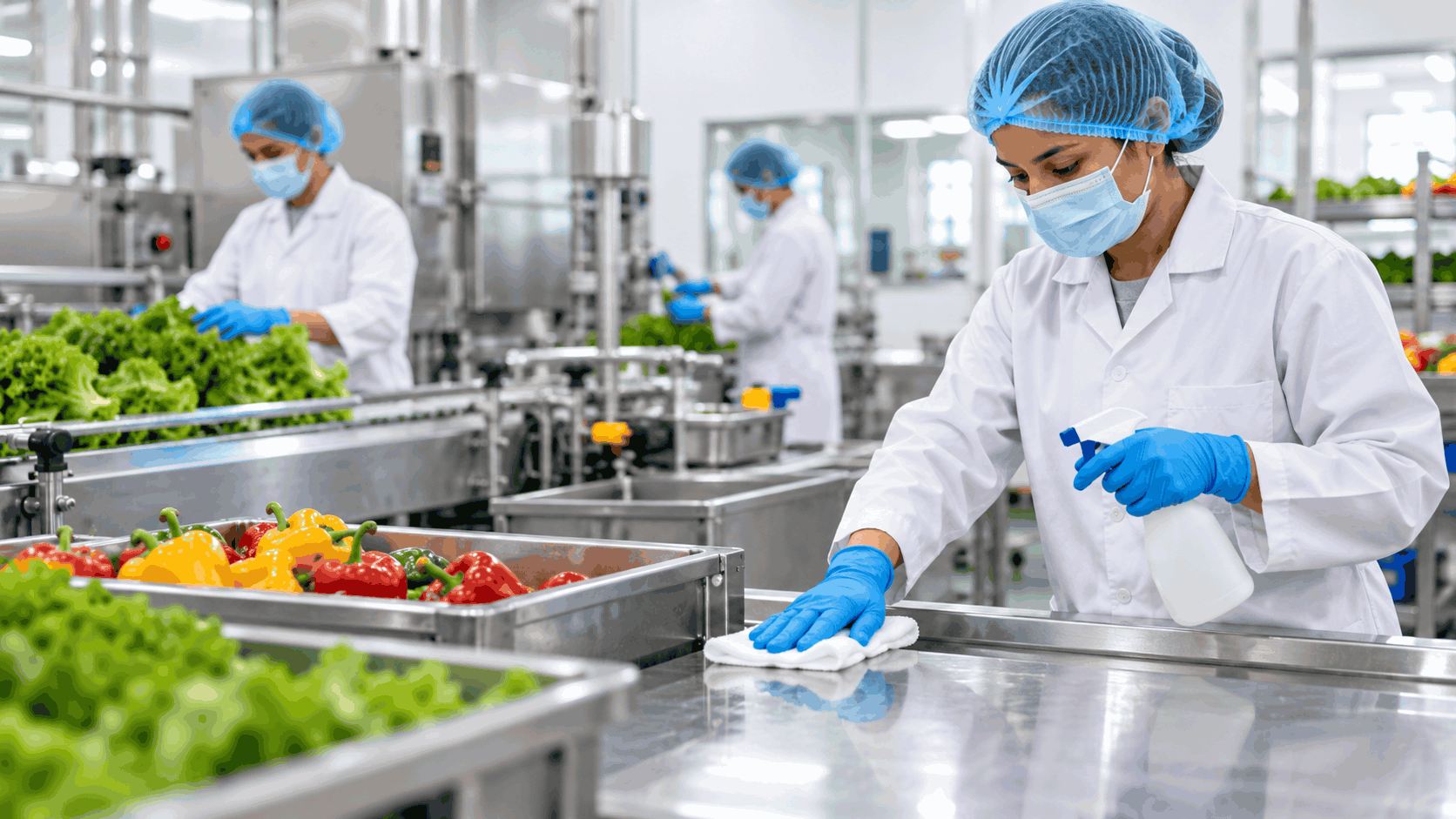
Employees must follow established personal hygiene procedures, including regular handwashing, clean protective clothing and appropriate use of gloves, masks and hair coverings. Staff should also receive regular training on safe food handling and contamination prevention.
Equipment, utensils and food-contact surfaces must be cleaned and sanitised according to documented procedures. These food processing hygiene practices help minimise contamination risks and support consistent manufacturing conditions.
Strengthening Cleaning and Sanitation Procedures
Effective cleaning and sanitisation are essential for preventing microbial contamination in food production environments. Cleaning removes visible dirt, food residues and organic matter, while sanitisation helps reduce microorganisms on appropriately cleaned surfaces.
Manufacturers should establish documented food processing sanitation procedures based on the type of product, equipment and production environment. Cleaning schedules should identify the equipment and surfaces requiring attention, the approved cleaning chemicals, application methods and verification requirements.
Particular attention should be given to hard-to-reach areas, pipelines, storage tanks, mixers and filling equipment. Regular inspections and appropriate verification methods help ensure that sanitation procedures are effective.
Applying HACCP and Good Manufacturing Practices
Food Safety Management Systems provide a structured approach to identifying, evaluating and controlling potential food safety hazards. HACCP in food processing is an important preventive framework that helps manufacturers identify biological, chemical and physical hazards at different production stages.
Through hazard analysis and appropriate control measures, manufacturers can establish procedures for monitoring critical operations, maintaining records and responding to deviations. Good Manufacturing Practices (GMP) further support food safety by establishing expectations for employee hygiene, facility maintenance, equipment handling, storage and production operations.
Following applicable food manufacturing hygiene standards and maintaining proper documentation strengthens accountability and supports continuous improvement.
Preventing Allergen and Microbial Cross-Contamination
Allergen cross-contamination prevention requires special attention in facilities that process multiple food products. Even small amounts of an unintended allergen can create serious risks for sensitive consumers.
Manufacturers should identify allergen-containing ingredients, maintain appropriate segregation, use clearly identified storage containers and implement validated cleaning procedures between production runs. Ingredient handling and production scheduling should also minimise the possibility of accidental allergen transfer.
Preventing microbial contamination requires additional controls, including suitable temperature management, hygienic equipment design, safe water practices and appropriate separation of raw and finished products. Regular monitoring and microbiological testing, where appropriate, can help verify the effectiveness of food safety procedures.
Benefits and Challenges of Cross-Contamination Control
Effective cross-contamination prevention offers several operational and business benefits. It helps protect consumer health, maintain product quality, reduce the risk of product recalls and support compliance with applicable food safety requirements. Consistent hygiene procedures can also improve production discipline, minimise avoidable waste and strengthen customer confidence.
However, maintaining effective controls requires continuous employee training, equipment maintenance, proper sanitation resources and regular monitoring. Facilities handling different product categories may face additional challenges related to shared equipment, allergen management and production scheduling.
Manufacturers must therefore review their food safety procedures regularly and update them whenever ingredients, equipment, processes or production layouts change.
Future of Food Safety in Modern Manufacturing
The future of industrial food safety practices will increasingly depend on preventive controls, digital documentation and improved monitoring technologies. Automated cleaning systems, environmental monitoring tools and digital batch records can help manufacturers improve process visibility and identify potential issues more efficiently.
Modern facilities are also placing greater emphasis on hygienic equipment design, traceability and integrated quality management. These developments can support stronger food safety management systems when combined with trained personnel and properly validated procedures.
Conclusion
Preventing cross-contamination in modern food processing facilities requires a comprehensive approach that combines employee hygiene, effective sanitation, equipment maintenance, allergen management and preventive food safety controls. By implementing Good Manufacturing Practices, HACCP principles and documented sanitation procedures, manufacturers can create safer and more reliable production environments.
For businesses seeking dependable food manufacturing solutions, choosing a partner that prioritises hygiene, quality control and process discipline is equally important.
Looking for a food manufacturing partner? Explore EXIITO's food manufacturing services for private label, white label, contract and third-party manufacturing solutions across beverages, namkeen, makhana and pickles. Connect with the EXIITO team to discuss your manufacturing requirements.