
Introduction
Preserving food quality and ensuring safety are essential concerns for everyone involved in the food supply chain, from manufacturers to end consumers. During storage and transportation, changes in temperature, humidity, and handling conditions can affect product quality. Traditional packaging protects food from external factors, but it may not provide information about the product's condition throughout the supply chain.
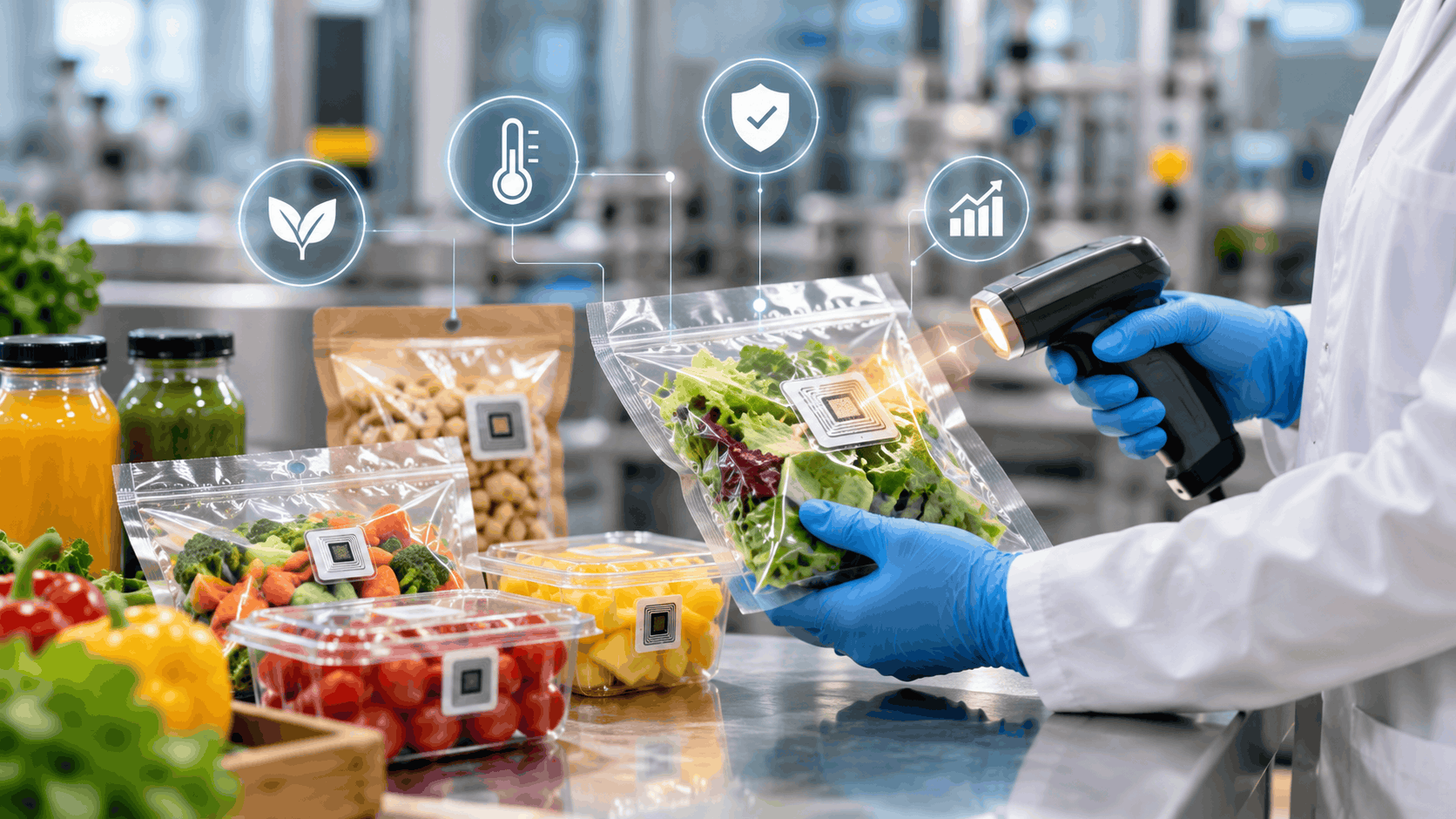
This is where smart packaging in food quality monitoring becomes valuable. By using sensors, freshness indicators, QR codes, and digital tracking technologies, businesses can gain better visibility into product conditions. These innovations support quality management, improve traceability, and help food businesses make more informed decisions.
What Is Smart Food Packaging Technology?
Smart food packaging technology uses features that provide information about a product or help maintain its quality. Unlike conventional packaging, which primarily protects food from contamination, light, oxygen, and moisture, smart packaging can also communicate information about storage conditions and product handling.
For example, temperature indicators can reveal whether a product has experienced certain temperature changes, while freshness indicators may respond to specific chemical changes associated with deterioration. Digital identifiers can connect packages to batch information and storage instructions.
These technologies are relevant to products such as dairy foods, meat, seafood, ready-to-eat meals, and other temperature-sensitive items. However, each solution must be validated for its intended application. Smart packaging supports quality checks but does not replace appropriate storage practices, laboratory testing, or food safety procedures. Learn more about modern food safety technologies used in food manufacturing.
How Smart Packaging Improves Food Quality Monitoring
Monitoring Temperature and Storage Conditions
Temperature is an important factor in maintaining food quality and safety. Certain products require controlled storage conditions, and temperature fluctuations during distribution can create quality concerns.
Smart packaging can incorporate temperature sensors or time-temperature indicators that record or display specific changes. This information can help warehouse teams and distributors identify products requiring further inspection.
When connected with suitable monitoring systems, these technologies can support better cold-chain management and help businesses identify potential handling problems before products reach consumers.
Detecting Changes in Food Freshness
Food can deteriorate because of microbial activity, chemical reactions, and unsuitable storage conditions. Certain smart packaging solutions include indicators that detect specific gases, chemical compounds, or environmental changes linked to food spoilage.
This can provide useful information without opening every package. However, indicators are designed for specific applications and cannot independently guarantee that a product is safe to consume. Their performance must be evaluated alongside appropriate food safety checks.
Manufacturers can also explore rapid testing methods for food quality control to understand how testing technologies can complement packaging-based monitoring.
Improving Traceability and Product Tracking
Food products often pass through several stages before reaching consumers. Food quality monitoring systems can become more effective when packaging is connected to reliable tracking information.
QR codes, RFID tags, and digital identification systems can link products to details such as batch numbers, manufacturing dates, product origin, and storage instructions. If a quality concern arises, accurate records can help businesses identify affected batches and trace their movement through the supply chain.
Digital traceability is most effective when suppliers, manufacturers, distributors, and retailers maintain accurate and consistent records. EXIITO explains how quality assurance and traceability processes support product monitoring and batch accountability.
Supporting Food Shelf Life Monitoring and Waste Reduction
Food shelf life monitoring helps businesses understand how storage and handling conditions may affect product quality over time. Certain smart packaging indicators can provide additional information about temperature exposure or selected freshness-related changes.
This information may help businesses prioritise inspections, improve stock management, and investigate potential handling problems. When combined with suitable inventory practices, smart packaging may also help reduce avoidable food waste.
However, indicators should not be treated as automatic replacements for validated shelf-life studies, expiry dates, or established food safety procedures.
Types of Active and Intelligent Packaging
Active and intelligent packaging serve different purposes. Intelligent packaging provides information about a product or its environment, while active packaging interacts with the product or package environment to help maintain quality.
Intelligent systems may include freshness indicators, temperature indicators, and digital tracking features. Active packaging can include oxygen absorbers and moisture-control components designed for particular products. Some systems combine both approaches.
QR codes and RFID tags also support digital packaging applications. QR codes can provide access to ingredient information, storage instructions, and product details, while RFID can help identify and track items. Neither technology detects spoilage on its own unless it is integrated with appropriate monitoring equipment and data.
To explore more packaging developments, visit EXIITO's Food Packaging and Innovation blog category.
Benefits and Challenges for Food Manufacturers
Smart packaging can support better quality decisions, improve product traceability, and make selected inventory tasks easier to manage. It can also provide customers and business partners with more accessible product information.
However, adoption comes with challenges. Sensors, indicators, and digital systems may increase packaging costs. Businesses must also consider accuracy, compatibility with existing machinery, staff training, and relevant food-contact material requirements.
Before implementing a solution, manufacturers should assess their specific needs, request technical documentation, and test the packaging under realistic storage and transportation conditions. Effective research and development, along with quality control procedures, helps businesses assess product standards and maintain consistent quality. EXIITO's R&D and quality control services explain how product development, process checks, and finished-product inspections contribute to quality management.
The Future of Smart Food Packaging
The future of smart food packaging may involve wider use of connected sensors, digital tracking, and data analysis. Artificial intelligence could help businesses identify recurring temperature problems, analyse supply-chain records, and improve storage decisions.
Advances in packaging materials and monitoring systems may create new opportunities for manufacturers. Nevertheless, successful adoption will depend on affordability, reliable data, product compatibility, and regulatory compliance.
Businesses should focus on technologies that solve practical problems rather than adopting complex systems without a clear purpose. Digital solutions can also complement other developments in AI and digitalisation across the food industry.
Conclusion
Smart packaging is changing food quality monitoring by helping businesses track storage conditions, improve traceability, and identify potential quality concerns. Sensors, freshness indicators, QR codes, and RFID systems each offer different advantages when selected for the right application.